
Every day, 41 people die from an opioid overdose. The dangers of opioid addiction have nearly doubled in the last ten years. Read our opioid comparison of the 13 most common opioids and their individual characteristics.
Opioid Overdose and Death Rates
In 2016, 62 people per 100,000 visited the emergency room because of an opioid overdose. In the same year, the hospitalization rate for non-fatal opioid overdoses was 27 people per 100,000. Sadly, the overdose death rate that year was 13 people per 100,000. Death rates more than doubled in a 10-year period from 2006 to 2016.
The dangers of opioid use are evident in the above statistics provided by the Centers for Disease Control and Prevention (CDC). More importantly, it is critical to understand the distinctions between the various types of opioids and their strengths and severity.
Opioid Comparison
Even those prescribed opioids for pain relief are at risk of misuse, but some of the most commonly misused opioids are illicitly manufactured synthetic opioids. The opioids we feature in this guide are ordered from the lowest strength to the highest strength:
- Codeine
- Demerol
- Tramadol
- Morphine
- Vicodin
- Percocet
- Methadone
- Heroin
- Hydromorphone
- Oxymorphone
- Suboxone
- Fentanyl
- Carfentanil
Are you dependent on or addicted to one or more of the 13 most common opioids? Begin your opioid addiction recovery today by calling Asheville Recovery Center at (828) 518-6996.
Opioid Comparison Charts
In this ultimate opioid comparison guide, we examine more closely each of the opioids and compare the following characteristics:
- Commercial, generic, and street names
- Forms
- Methods of use
- Strength as compared to morphine
- Fatal dosages
- Short-term side effects
- Long-term side effects
- Overdose symptoms
- Withdrawal symptoms
- Withdrawal timelines
Commercial, Generic, and Street Names of Opioids
Do you know the language surrounding opioids and what they look like?
With the exception of heroin, the majority of opioids begin in a pill form because they are manufactured by pharmaceutical companies and prescribed by physicians. Widely available opioids such as morphine are manufactured by many different companies, so the pills come in different shapes, colors, and doses.
To get specific information based on a pill you possess, use WebMD’s pill identifier.
[table id=2 /]
However, once the opioid becomes a powder, it is very difficult to know what you are getting into. In fact, oftentimes, dealers will disguise or combine multiple opioids to increase earning potential. Unfortunately, this also increases the potential for overdose.
Opioid Comparison of Forms and Strengths
We continue to order the 13 most common opioids from weakest to strongest. Many opioids are derivatives of morphine; therefore, the strength of each one is compared to the strength of morphine itself. Also included is the potentially fatal dose of each opioid.
[table id=3 /]
Keep in mind that any powder form you obtain could be a combination of several opioids, so it is difficult to know the strength and danger unless you know the exact composition.
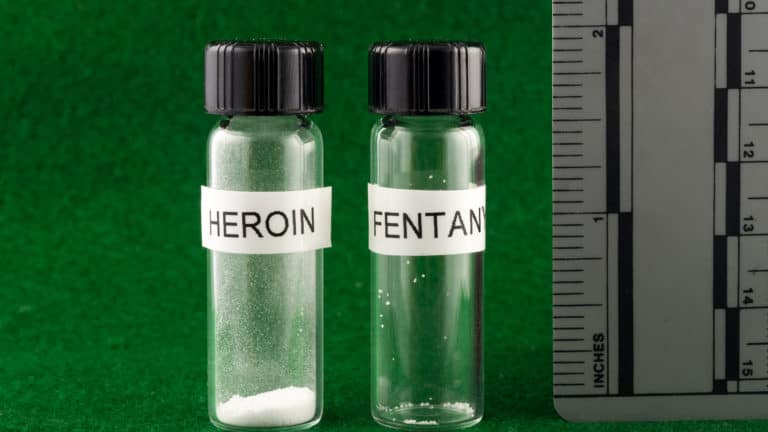
Fentanyl is often sold as “more potent” heroin, but fentanyl is nearly ten times stronger than heroin and only 3 milligrams is a potentially fatal dose.
Opioid Comparison of Short-Term and Long-Term Side Effects
In the table below, you will see similar side effects across all opioids provided by the National Institute on Drug Abuse (NIDA). Depending on the individual, some short-term side effects may be more severe. The long-term effects, however, lead to horrific outcomes.
[table id=4 /]
Consequently, it doesn’t matter the length of time of use or the time since the last use, anyone who uses any type of opioid is at risk for long-term health complications, especially breathing problems.
The side effects of opioid use and withdrawal symptoms can be very unpleasant. Dial (828) 518-6996 to speak with an Asheville Recovery Center representative to learn more about how we can help.
Opioid Comparison of Overdose and Withdrawal Symptoms
Similar to short-term side effects, an overdose on the various opioids present similar symptoms. Withdrawal symptoms are often worse than side effects. The peak of withdrawal of the majority of opioids will be 72 hours after the last use. However, the withdrawal timeline based on the type of opioid can vary widely.
[table id=5 /]
Expect the physical symptoms of withdrawal from any opioid to last at least one week. Unfortunately, weeks, months, or even years after use, psychological symptoms from opioid withdrawal such as depression and anxiety will linger.
Opioid Interactions with other Drugs
Consistent across most opioids, alcohol use will increase the severity of side effects. Provided by Frontiers in Pharmacology, below is a list of other types of drugs that will also increase the dangers of opioid use.
- Anticholinergics (dicycloverine)
- Antihistamines (hidroxycine, prometazine, diphenhydramine, chlorphenyramine, doxylamine)
- Antiinflammatory or analgesic drugs (Ibuprofen, acetaminophen, salicylic acid, naproxen)
- Antidepressants (fluoxetine, mirtazapine, citalopram, sertraline, amitriptyline, venlafaxine)
- Antipsychotics (clorprormazine, risperidone, quetiapine, olanzapine, doxepin, promethazine)
- Anticonvulsants (pregabalin, clonazepam, gabapentin, carbamazepine)
- Barbiturates (phenobarbital)
- Benzodiazepines (diazepam, alprazolam, nordiazepam, chlordiazepoxide, etizolam tablets, lorazepam)
- Stimulants (ephedrine, cocaine, amphetamine, nicotine, mephedrone)
Sometimes combining opioids with particular medications can lead to death. Before mixing, be sure to contact a pharmacist for recommendations.
Explore your opioid addiction treatment options today. As one of the best, long-term rehabs in North Carolina, our experts have your back. Dial (828) 518-6996 to speak with an Asheville Recovery Center representative to begin your journey.