Specialized Program
Dual Diagnosis Treatment
When you’re fighting addiction and a mental health struggle at the same time, you need a different kind of care. We understand the connection, and we’re here to help you heal completely.
What Does “Dual Diagnosis” Actually Mean?
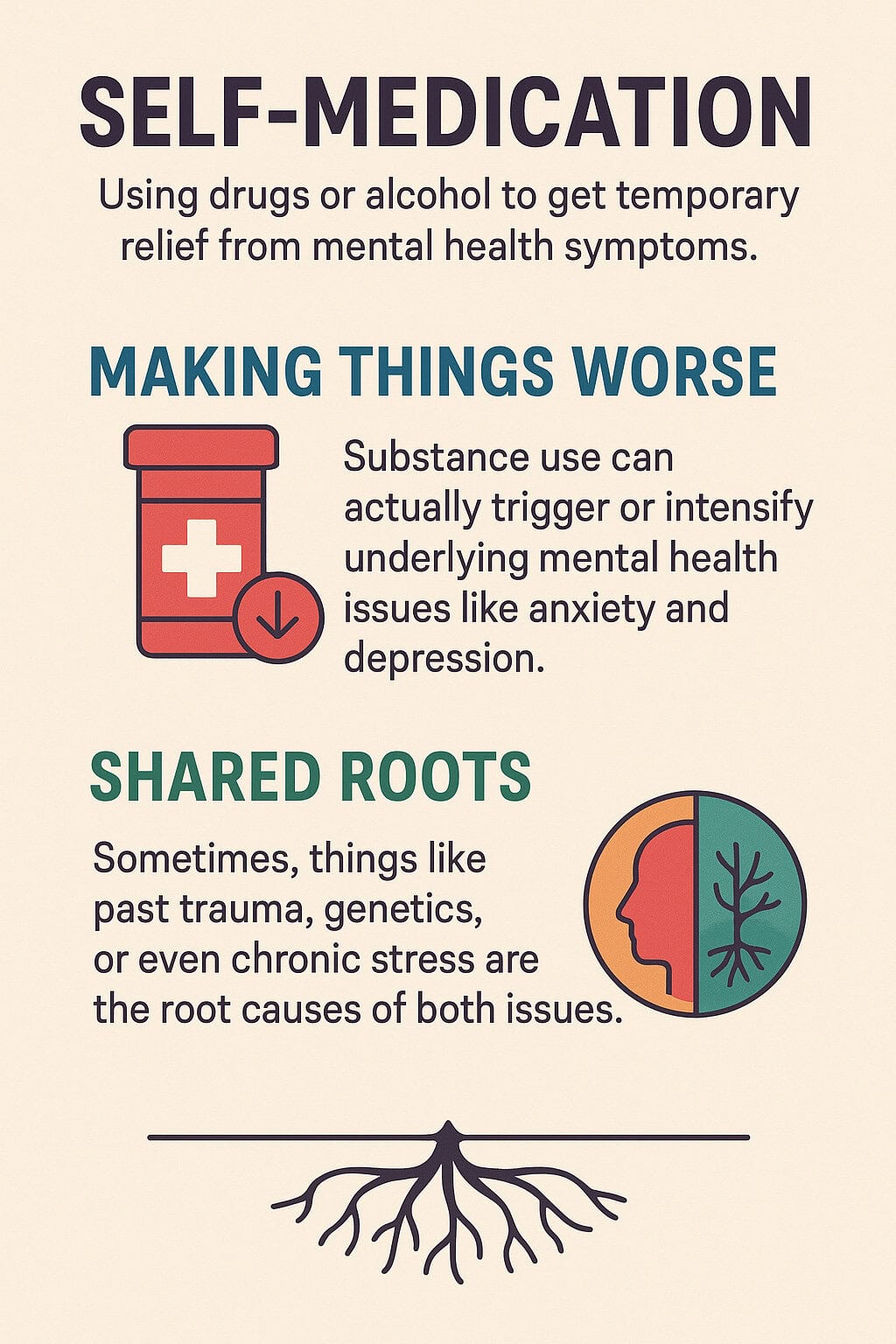
Feeling trapped in a cycle between substance use and your mental health is exhausting. It can feel like you’re fighting a war on two fronts, and one battle always seems to make the other one worse. Simply put, a dual diagnosis means you’re dealing with a substance use disorder and a mental health condition at the same time. Here at Asheville Recovery Center, we know that these two issues aren’t separatethey’re deeply connected.
The Cycle Is Real, and It’s Not Your Fault
Millions of people are in the same situation. You might be using substances to quiet your anxiety or numb feelings of depression, only to find the substance makes those feelings worse in the long run. It’s a vicious cycle that’s incredibly difficult to break on your own.
Our entire approach is built around treating you as a whole person, not just a set of symptoms. We help you break the cycle by addressing both conditions simultaneously.
We See You. We Understand.
Whatever combination of challenges you’re facing, chances are we’ve helped someone through a similar struggle. Here are some common pairings we treat every day:
Anxiety & Alcohol Use
That drink that calms your nerves starts to become the only way you can cope, but it ends up making your anxiety ten times worse.
Depression & Opioid Use
You use opioids to escape the heaviness of depression, but they pull you deeper into isolation and despair.
PTSD & Stimulants
Trying to outrun traumatic memories with stimulants only leaves you feeling more on-edge, paranoid, and exhausted.
Bipolar Disorder & Cocaine
Cocaine might feel like it matches your manic energy, but the crash makes the depressive episodes feel even more impossible to survive.
Your story is unique. We’re here to listen and help you find the specific support you need.
Healing the Whole You: Our Integrated Approach
You can’t fix a car by only changing one tire. We treat your mental health and substance use together, at the same time, under one roof. It’s the only way to create real, lasting change.
We Start By Listening
Your story matters. We begin with a real conversation to understand what you’re going through. This helps us build a personalized recovery plan that actually makes sense for you.
Therapy That Actually Works
We use proven therapies like CBT, DBT, and EMDR to help you develop new coping skills, manage difficult emotions, and heal from past trauma in a safe space.
Support for Mind & Body
Recovery isn’t just about talking. We bring in activities like yoga and time in nature to help you heal on all levels. If medication can help stabilize your mental health, our medical team will manage it carefully.
You’re Not Alone Anymore
One of the most powerful parts of recovery is connecting with people who get it. In our group sessions, you’ll share your experience and build friendships that become your strongest support system.
A Place to Heal in the Heart of the Mountains
There’s something about the mountains that helps you breathe deeper. Getting away from the people, places, and things that trigger your use is a powerful first step. Asheville provides a peaceful place to focus on one thing: you.
We don’t just work in Asheville; we use the healing power of the Blue Ridge Mountains as part of our program. Here, you’re not a number or a diagnosis. You’re a person who deserves a fresh start, and we’re here to help you find it.

Your Questions, Answered Honestly
You Deserve to Feel Better. Let’s Talk.
Taking the first step is the hardest part, but you don’t have to do it alone. Our team is here to listen without judgment and help you figure out what’s next. Your call is 100% confidential.
Contact Us for a Confidential Consultation
Taking the first step is the most important one. Reach out to us today. All communications are 100% confidential and there is no obligation.